

Lorem ipsum dolor sit amet, consectetur adipiscing elit, sed do eiusmod tempor incididunt ut labore et dolore magna aliqua. Ut enim ad minim veniam, quis nostrud exercitation ullamco laboris nisi ut aliquip ex ea commodo consequat. Duis aute irure dolor in reprehenderit in voluptate velit esse cillum dolore eu fugiat nulla pariatur. Excepteur sint occaecat cupidatat non proident, sunt in culpa qui officia deserunt mollit anim id est laborum.
The Rehabilitation Team
Lorem ipsum dolor sit amet, consectetur adipiscing elit, sed do eiusmod tempor incididunt ut l abore et dolore magna aliqua. Ut enim ad minim veniam, quis nostrud exercitation ullamco laboris nisi ut aliquip ex ea commodo consequat. Duis aute irure dolor in reprehenderit in voluptate velit esse cillum dolore eu fugiat nulla pariatur. Excepteur sint occaecat cupidatat non proident, sunt in culpa qui officia deserunt mollit anim id est laborum.
Caring for Your Residual Limb
The earlier a prosthesis is fitted, the better. One of the most difficult problems facing a new amputee is edema, or swelling of the residual limb. The care you
give your residual limb initially will directly affect your success with your new prosthesis.
give your residual limb initially will directly affect your success with your new prosthesis.
Preparing for Your New Prothesis
Physical therapy to regain strength and agility is an important step in your preparation to use your new prosthesis. You may have had some therapy while you were in the hospital, and chances are your doctor will want you to continue with it, both now and after you receive your new prosthesis. The strength you develop now will help you to walk as normally as possible in the future.
Your First Fitting
Your prosthesis is custom made especially for you. Detailed measurements and possibly a cast will be taken at your first fitting in order to make your custom socket. The emphasis at the first fitting will be on you and your lifestyle taking into consideration your activities of daily living, your work, your physical size and agility. Your prosthetist will assess your functional ability and design a prosthesis optimally suited for you at this point in time.
Preparing for Your New Prothesis
Physical therapy to regain strength and agility is an important step in your preparation to use your new prosthesis. You may have had some therapy while you were in the hospital, and chances are your doctor will want you to continue with it, both now and after you receive your new prosthesis. The strength you develop now will help you to walk as normally as possible in the future.
Alignment Fittings
Your prosthetist will spend a lot of time working with you during this fitting to make sure your prosthesis is adjusted perfectly to your needs and comfort. The alignment fitting will take into account every aspect of your prosthesis’ fit and function. A lot of attention will be focused on the socket shape because it needs to spread out the pressures on your residual limb evenly and comfortably when you walk on it. The alignment is important to make sure your knee and hip are straight when you stand and walk, and the height of the prosthesis is not too tall or short.
Delivery of Your Prosthesis
When the prosthesis is finished, a final delivery appointment will be scheduled. It is common for this final fitting to occur at a physiatrist’s office, a rehabilitation facility, or in the office. The prosthesis will be evaluated one final time for comfort and alignment.
Gait Training
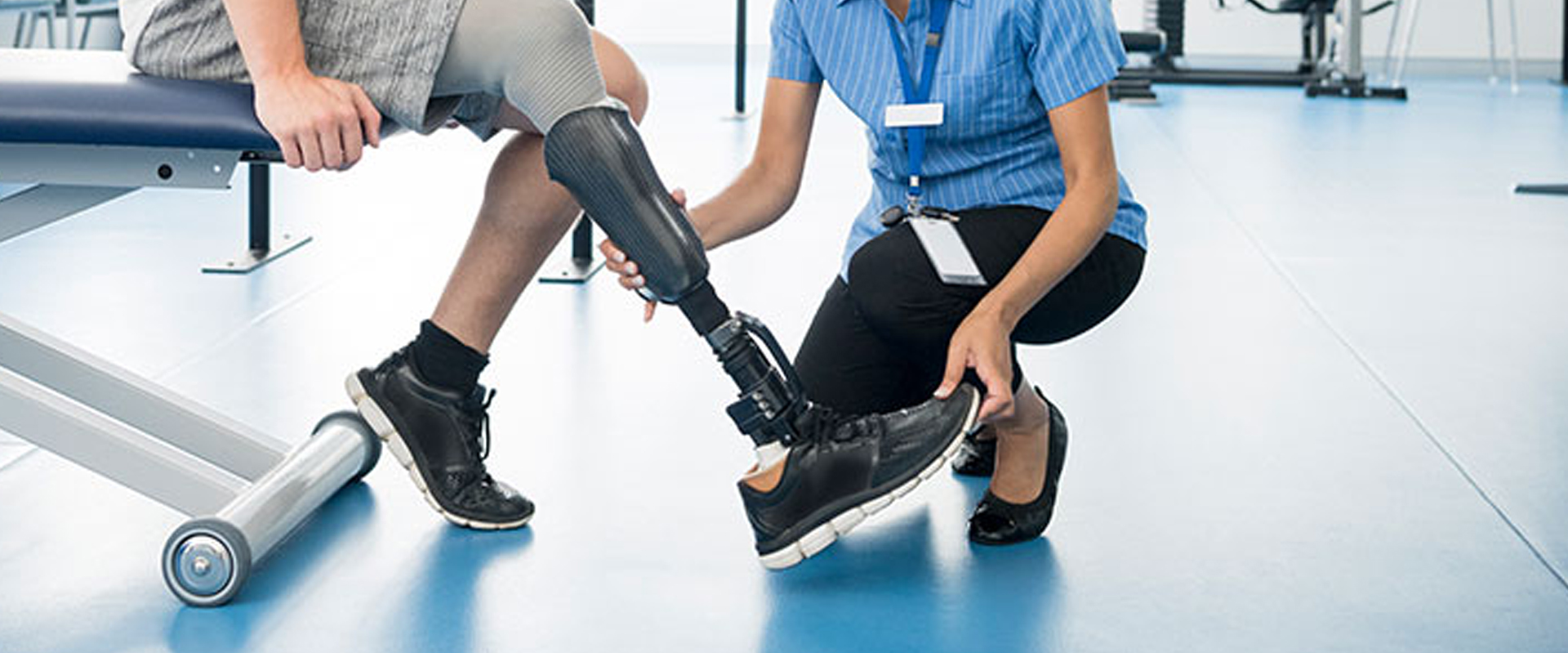
It is important that you learn to walk properly with your new prosthesis from the day you receive it. Your physical therapist will work with you and make recommendations regarding any additional support you may need to walk your best – such as a walker, crutches, or a cane. With your therapist’s help, you will soon be accomplishing many of your daily activities. We will be counting on you to call us whenever you have any questions about the fit, alignment, or general performance